

Toughened Glass Glasgow: Where It’s Required & Costs
- 18 July 2026
- News
If you’re replacing windows or doors in Glasgow, Clydebank, Bearsden, or anywhere else in the West of Scotland, you’ll come across the term “toughened glass” fairly quickly. Some of it is a legal requirement. Some of it is just common sense. Here’s the difference, plus how to check what’s already in your home.
What Is Float Glass?
Before toughened glass exists, it starts as float glass. This is standard, untreated glass made by pouring molten glass onto a bed of molten tin. The glass floats on the tin, which gives it a perfectly flat, smooth, distortion-free surface as it cools. Almost all flat glass — windows, mirrors, glass doors — starts life this way.
Float glass, also called annealed glass, is fine for most applications. The problem is how it breaks. When it fails, it fractures into long, sharp shards, which is exactly what you don’t want near a door, a low window, or anywhere someone could fall into it.
What Is Toughened Glass?
Toughened glass (also called tempered glass) is float glass that’s been heat-treated: heated to around 620°C, then rapidly cooled. This process puts the outer surfaces under compression and the core under tension, which makes the finished pane roughly four to five times stronger than standard float glass.
The real benefit isn’t just strength — it’s how it fails. If toughened glass breaks, it shatters into small, blunt granules rather than sharp shards, significantly reducing the risk of serious injury.
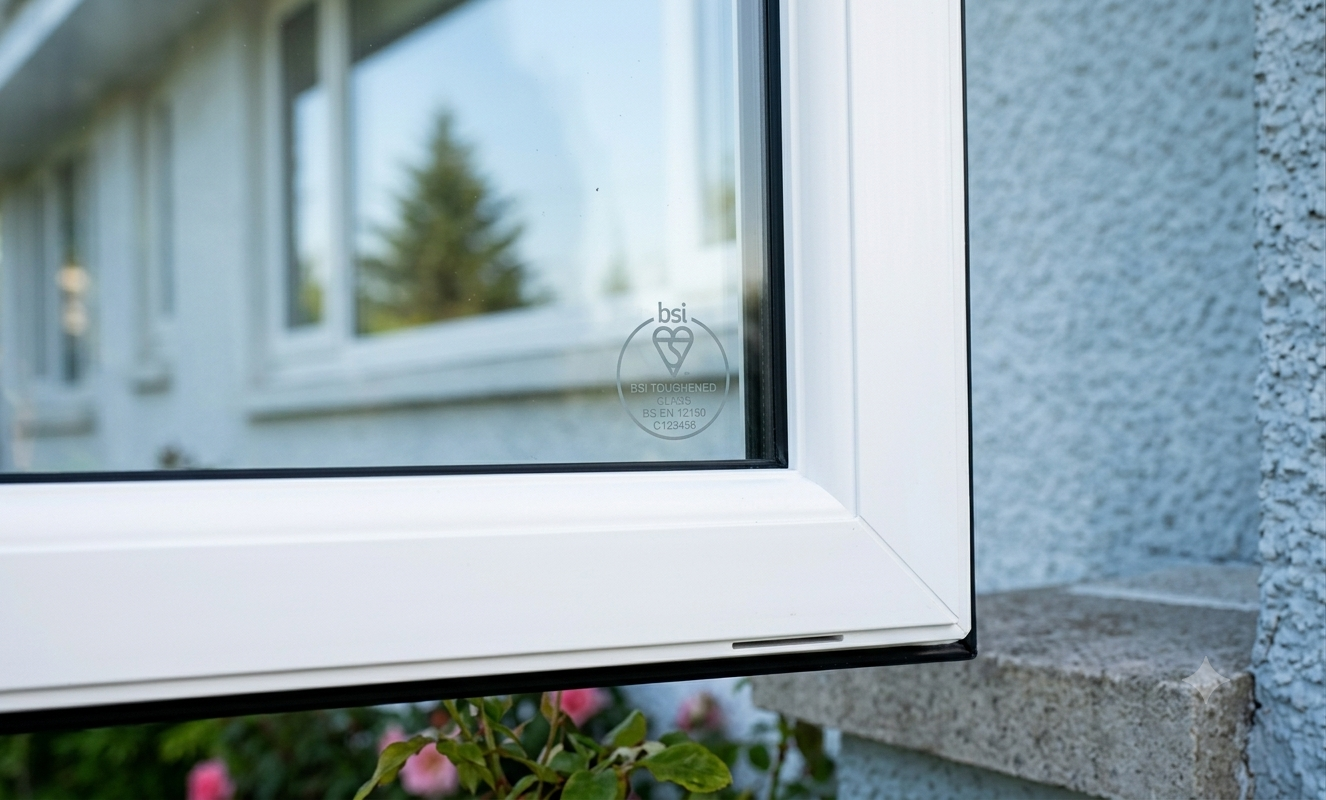
toughened glass kitemark etching, window corner, Glasgow
Where You Must Use Toughened Glass
Scottish Building Standards (Technical Handbook, Section 4.8) set out “critical locations” where safety glass — toughened or laminated — is a legal requirement, not a preference. These are:
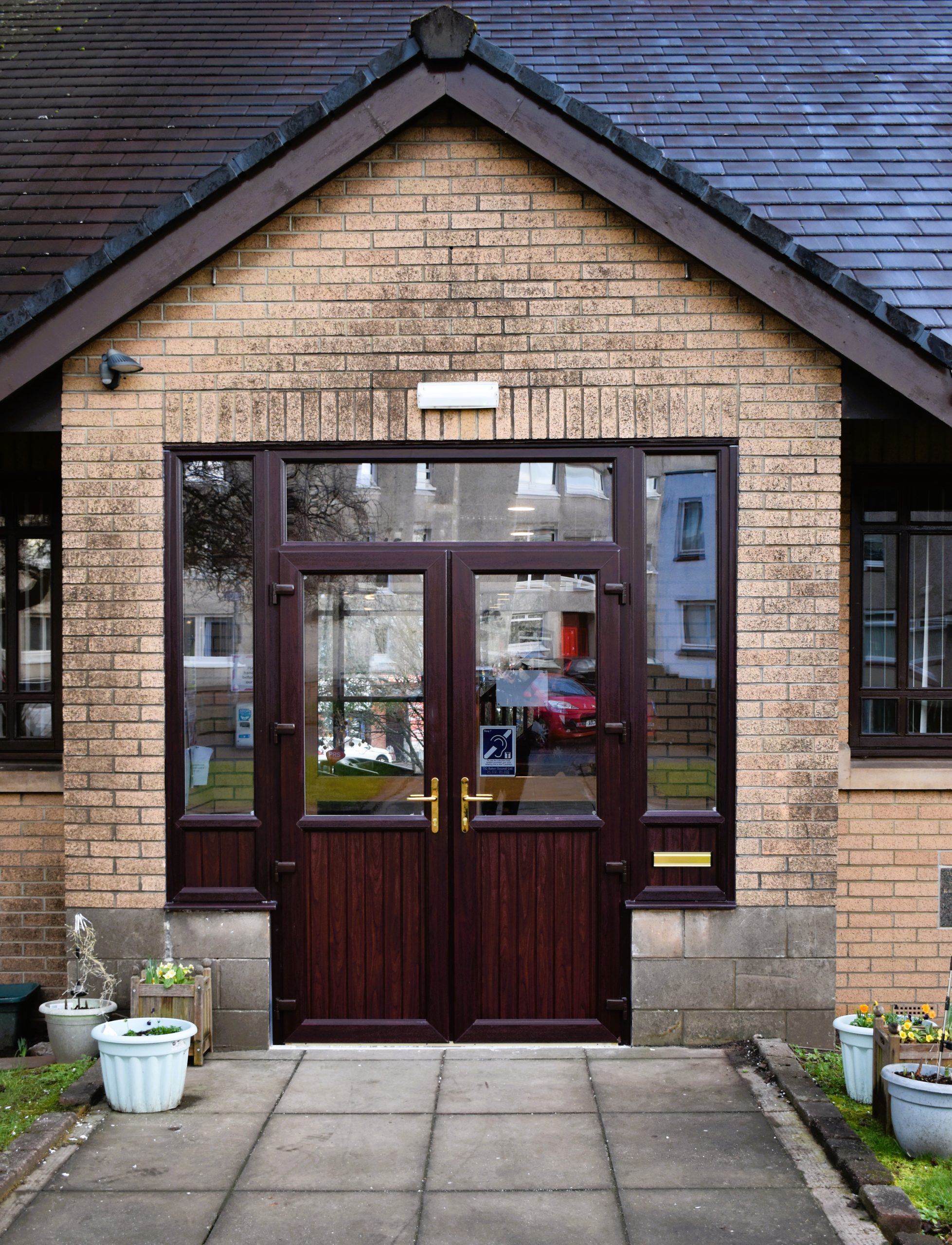
- Glazing in doors, and within 300mm of a door’s edge
- Any glazing between floor level and 800mm high
- Windows within 300mm of an internal corner, where someone could walk into them
Bathrooms often tick more than one of these boxes because of the mix of low-level windows and confined space, so they’re worth checking carefully. This applies whether you’re in a Clydebank tenement, a Bearsden bungalow, or a Milngavie conversion — the standard doesn’t vary by property type or postcode.
Safety glass used in these locations has to be tested to BS EN 12600 (or the older BS 6206) and must carry a permanent mark confirming this — more on that below. Building Control can require replacement if the marking isn’t there, even if the installer insists the glass is toughened.
Where You Should Use Toughened Glass (Even If It’s Not Required)
Beyond the legal minimum, there are spots where toughened glass is worth specifying even though the regulations don’t technically demand it:
- Conservatory and porch roofs — overhead glazing carries obvious risk if it fails, regardless of height from the floor
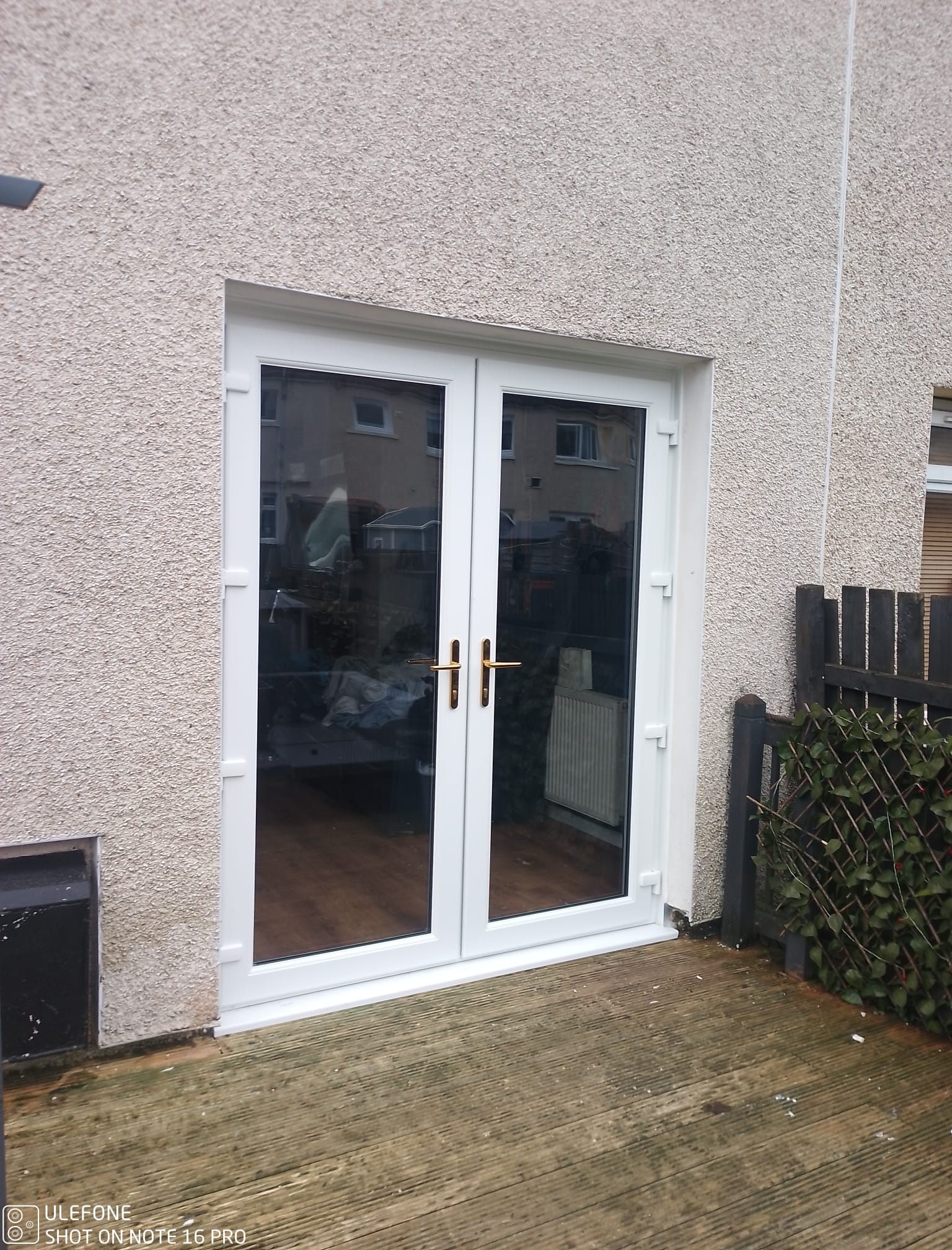
- French doors and bi-fold doors — large panes that get knocked, leaned on, or caught by furniture during moving
- Windows near stairs or landings — falls in these areas tend to be harder, even outside the strict “critical location” definition
- Homes with young children or pets — anywhere glass gets bumped, climbed near, or is at head height for a toddler
- Ground-floor windows facing gardens or driveways — added resistance to accidental impact from footballs, tools, or garden equipment
None of this is regulatory box-ticking. It’s about where a broken pane would actually cause a problem.
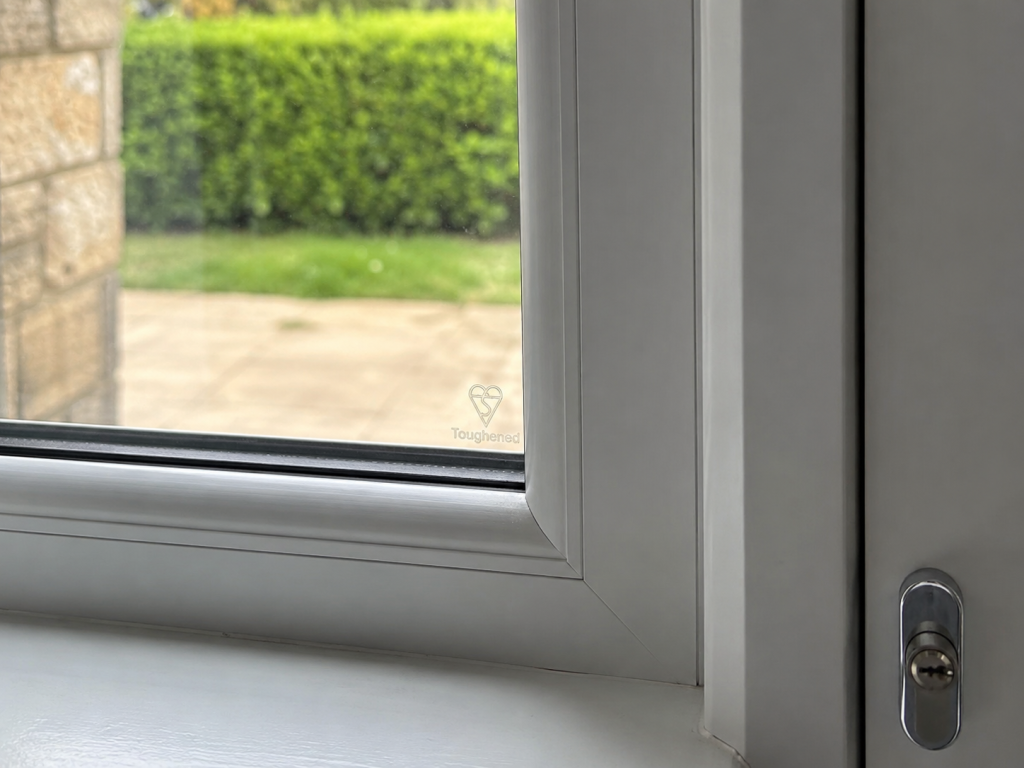
How to Check If Your Double Glazing Is Toughened
If your windows are already installed, there’s a straightforward way to check without removing anything:
- Look in the corners of the glass. Toughened glass in a critical location must display a permanent mark — usually a small kitemark or etched text — confirming it meets BS EN 12600 or BS 6206.
- Read what the mark says. It should reference the relevant standard and, often, the manufacturer. If you see “BS EN 12150” that confirms toughened glass specifically.
- No mark doesn’t always mean no toughening, but if a pane in a critical location has no mark at all, that’s worth querying with whoever installed it — ask for the toughening certificate or audit trail from the glass manufacturer.
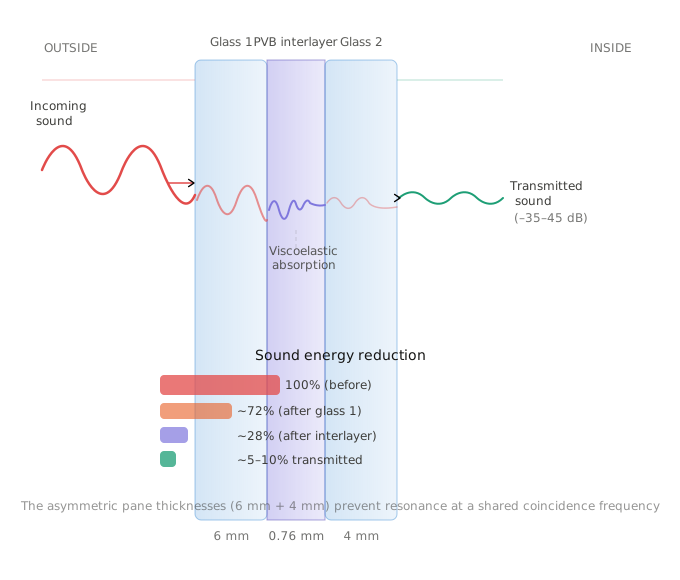
- If the unit is laminated instead of toughened, it may not carry a mark in the same way, since laminated glass also satisfies the safety glass requirement but behaves differently when it fails (it holds together rather than shattering into granules).
If you can’t find any marking and want certainty, the only fully reliable option is to have the unit checked or replaced by a glazier who can confirm the specification in writing.
The Cost Difference
Toughened glass costs more to produce than float glass, because of the extra heat-treatment process — typically up to around 25% more than standard annealed glass for an equivalent pane. Laminated glass, which sandwiches a plastic interlayer between two sheets of glass, generally costs more again than toughened.
For most domestic jobs, this difference is modest in the context of a full window or door price, and in critical locations it isn’t optional anyway. Where it becomes a genuine decision point is in those “should” locations above — conservatory roofs, French doors, ground-floor windows — where the extra cost buys real peace of mind rather than just regulatory compliance.
Frequently Asked Questions
Do all my windows need to be toughened glass? No. Only glazing in “critical locations” — doors, glass within 300mm of a door edge, and glazing below 800mm from floor level — is legally required to be safety glass. Everywhere else, standard float glass is permitted, though toughened is often worth the extra cost.
Is toughened glass the same as safety glass? Toughened glass is one of two types of safety glass recognised under Scottish Building Standards, the other being laminated glass. Both satisfy the legal requirement in critical locations, but they behave differently when they break.
How do I know if my windows already have toughened glass? Check the corners of the glass for a kitemark or etched reference to BS EN 12600 or BS 6206. No mark doesn’t automatically mean it isn’t toughened, but in a critical location it should be marked — if it isn’t, ask your installer for proof.
Is toughened glass more expensive than normal glass? Yes, typically up to around 25% more than standard float (annealed) glass, due to the heat-treatment process. Laminated glass costs more again.
If you’re unsure whether your existing glazing meets current safety glass requirements, or you’re planning replacement windows or doors and want the right specification from the outset, get in touch with Williams Windows & Doors.
Phone: 0141 941 3050
Email: info@williamswindows.co.uk
www.williamswindows.co.uk