

Roof Lantern Installation Glasgow: Rules, Fitting & Advice
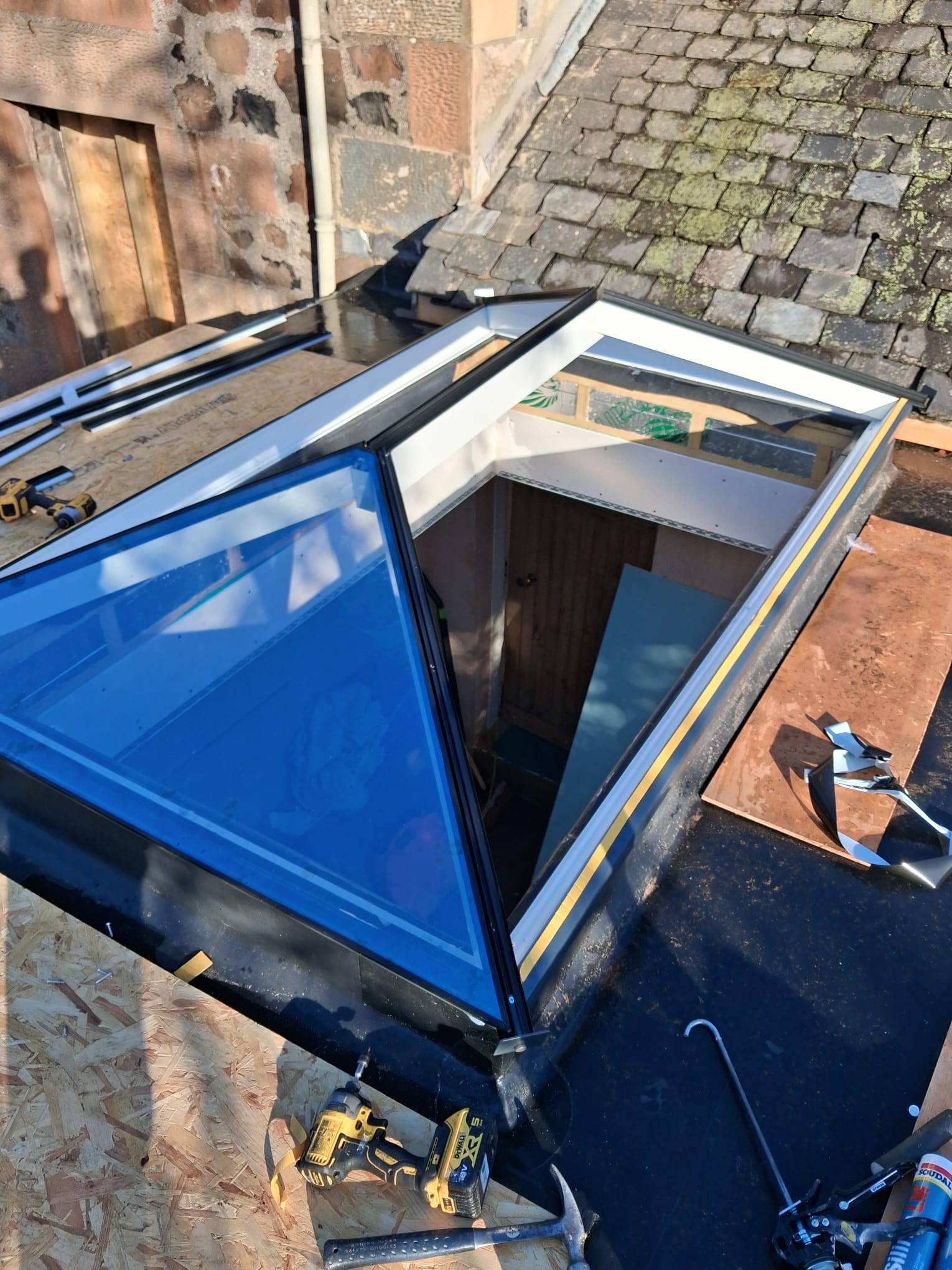
- 11 October 2026
- FAQs
Roof Lantern Installation in Glasgow: Building Warrants, Planning and What Fitting Involves
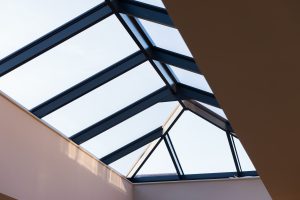
A roof lantern is one of the simplest ways to get more daylight into a flat-roofed extension. Most of the questions we get about roof lantern installation in Glasgow aren’t about style. They’re about whether the roof can take one, whether the council needs to be involved, and what the job actually involves on the day.
This guide covers those questions. If you’re still choosing a style or size, or want an idea of price, start with our roof lantern styles, sizes and prices guide and come back to this one.
Can my roof take a roof lantern?
Most flat roofs can, but it depends on how the roof is built and what’s under it.
A roof lantern sits on a raised frame called a kerb (or upstand), built around an opening in the roof. To make that opening, some of the roof joists have to be cut and the load carried around the gap by new timbers or a steel beam. On a typical kitchen or living room extension this is routine joinery. Things that make it more involved include:
- Joists running the wrong way for the size you want. A large lantern may mean cutting several joists, which usually needs a structural engineer’s calculations.
- Services in the roof void. Cables, extractor ducting and downlights may need to be moved.
- The condition of the existing roof. If the felt or membrane is near the end of its life, it often makes sense to re-cover the roof at the same time rather than patch around a new lantern.
- Very low roof falls. Water needs to run away from the kerb, not sit against it.
Lanterns can also go on new extensions, where the opening is designed in from the start. This is the easiest route, because the builder can frame the opening to the lantern’s exact size.
Do I need planning permission for a roof lantern in Scotland?
The rules in Scotland are different from England, so be careful with advice written for English homes.
For a house that isn’t listed or in a conservation area, a roof lantern on an existing flat roof is normally covered by householder permitted development. The Scottish rules (Class 2B) allow alterations to a roof as long as nothing protrudes more than 1 metre from the roof plane. Most lanterns sit well under that height.
You will usually need planning permission if:
- Your home is in a conservation area. There are no Class 2B permitted development rights in conservation areas. Glasgow has a lot of them, including much of the West End, Pollokshields and Hyndland, parts of Milngavie and Bearsden, and neighbouring councils have their own.
- Your home is listed. You’ll need listed building consent, whatever the planning position.
- You live in a flat. Permitted development rules for flats are much narrower than for houses.
- The lantern is part of a new extension that needs planning permission itself. In that case it’s simply shown on the extension drawings.
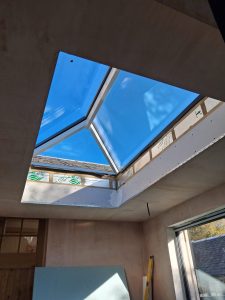
New Sky Lantern Fitted as art of house extension
If you’re unsure, your council’s planning department can confirm whether your property is in a conservation area. Glasgow City Council, East Dunbartonshire, West Dunbartonshire, Renfrewshire and East Renfrewshire all publish conservation area maps online.
Do I need a building warrant?
Planning and building warrants are separate. Planning is about how the house looks. A building warrant is about whether the work is safe and meets the building standards.
Cutting a new opening in a roof. This is an alteration to the structure of the roof, so it generally needs a building warrant. The application usually includes drawings and, for anything beyond a small opening, structural calculations. Warrant fees are set nationally and based on the value of the work. For work up to £5,000, the fee is £215 from April 2026.
Replacing an existing lantern or rooflight. Swapping an old unit for a new one in the same opening, frame included, doesn’t normally need a warrant. The new lantern still has to meet the current building standards, including the energy standards for glazing.
Fitting a lantern as part of a new extension. It’s covered by the extension’s own warrant.
Work that needs a warrant shouldn’t start before the warrant is granted. When you come to sell, a missing warrant or completion certificate can hold things up. If you’re not sure which category your project falls into, ask your council’s building standards team or ask us at the consultation.
Replacing an old or leaking roof lantern
A lot of the lanterns we replace around Glasgow were fitted in the 1990s and 2000s, often uPVC or timber with older double glazing. The common problems are:
- Leaks at the ridge or hips. Seals and gaskets break down over time and wind-driven rain finds its way in.
- Condensation and misting. Failed sealed units mist between the panes. Older glazing also runs with condensation on cold mornings, especially over kitchens.
- Overheating in summer. Clear glass without solar control can make the room hard to use on sunny days.
- Discoloured or sagging frames. Older uPVC lanterns can yellow and deflect under their own weight.
If the kerb underneath is sound and the right size, a replacement lantern can often sit on the existing kerb. If the kerb is rotten or too low, it should be rebuilt first. Fitting a new lantern onto a bad kerb is a common cause of leaks. We can handle all of that.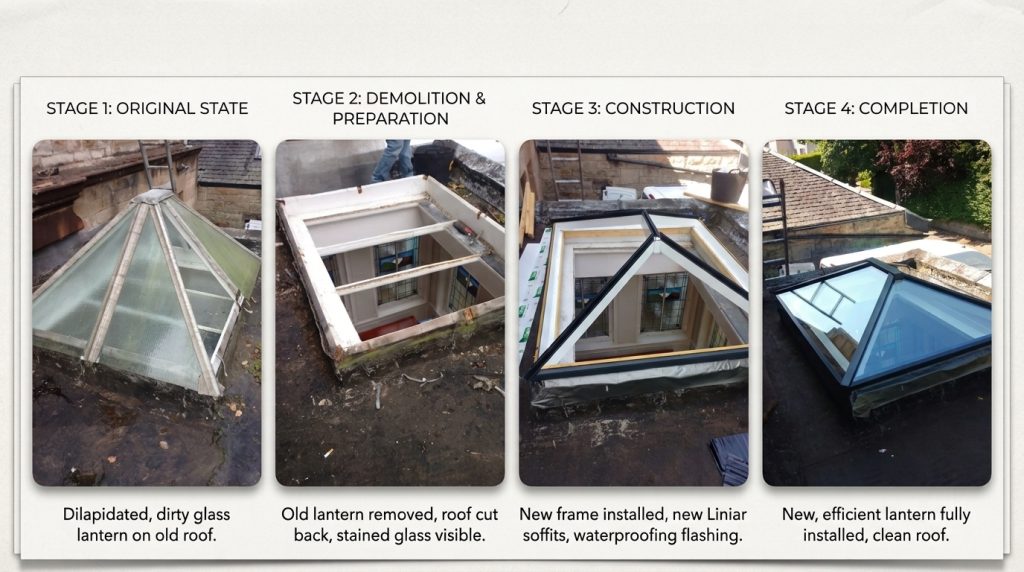
Sometimes a lantern is set into a conservatory roof that has other problems. If the whole roof is the issue, it may be worth looking at a conservatory roof replacement instead.
What installation involves
Every roof is different, but most jobs follow the same steps.
- Survey and measure. We check the roof build-up, joist direction, roof covering and the room below, then confirm the lantern size. Lantern sizes are quoted as external kerb sizes, so the kerb has to be built to suit.
- Paperwork, if needed. If a new opening is being cut, the building warrant needs to be in place before work starts.
- Forming the opening. The roof covering is cut back, joists are trimmed, and the opening is framed. Rooms below are protected with dust sheets, and the opening is kept weathertight until the lantern goes in.
- Building the kerb. The kerb is built and insulated. It’s usually at least 150mm above the finished roof surface so standing water and splash-back stay clear of the lantern’s base.
- Weatherproofing. The roof membrane (EPDM rubber, GRP fibreglass or felt) is dressed up and over the kerb so water runs off it.
- Fitting the lantern. The frame is assembled and the glass units are installed and sealed.
- Making good inside. The inside of the kerb is lined with plasterboard and finished ready for decorating. Lighting can be added in the reveal at this stage.
Replacing a lantern on a sound existing kerb is usually a one or two day job. A new opening in an existing roof normally takes a few days, depending on the joinery and roofing work. On a new extension the lantern is fitted once the roof is built and covered.
Choosing glass for Scottish weather
Glasgow doesn’t usually have an overheating problem, but a large area of glass in a roof does catch a lot of direct sun in summer. In winter, roof glass loses more heat than a wall. Getting the glass right makes more difference to how the room feels than the frame does.
Our aluminium lanterns come with solar control, self-cleaning glass as standard. The solar control coating cuts glare and heat build-up. The self-cleaning coating uses daylight and rain to break down dirt, which suits a roof that’s awkward to reach. Lanterns are glazed to 1.2 W/m²K as standard, with a free upgrade to 1.0 W/m²K. All roof glass is toughened. For more on where safety glass is required, see our guide to toughened glass in Glasgow.
On condensation: any cold surface over a kitchen or bathroom will get some condensation in a Scottish winter. Better glazing reduces it a lot, and so does good ventilation in the room below, such as an extractor hood that vents outside or trickle vents in the windows.
Roof lanterns on Glasgow and West of Scotland homes
The jobs we see most often around Glasgow are:
- Rear kitchen extensions on semis and terraced houses, where the back of the kitchen gets very little daylight. A lantern over the dining or island area is the usual fix.
- Extensions on bungalows and villas in areas like Bearsden, Milngavie, Newton Mearns and Giffnock, often paired with aluminium bi-folding doors or sliding patio doors onto the garden.
- Replacing old lanterns and flat rooflights on extensions built in the last 20 to 30 years.
- Flat roof garages and utility rooms converted into living space, where a smaller flat rooflight is often a better fit than a full lantern.
Our lanterns are made in white, anthracite grey or black, or dual colour with a white inside. Many people match the outside to their doors and windows. If you’re deciding on a colour, our article on whether black and grey windows will go out of fashion may help.
Frequently asked questions
How long does it take to fit a roof lantern?
Replacing a lantern on an existing kerb is usually done in one day. Cutting a new opening in an existing roof takes longer, typically a few days, because of the joinery and roofing work. Our standard stock lanterns are ready in 2 to 3 weeks.
Can a roof lantern be fitted to any flat roof?
Most flat roofs can take one, but it depends on the joists, the size of lantern and the condition of the roof covering. A survey will confirm what’s needed and whether a structural engineer should be involved.
Do I need a building warrant to replace a roof lantern?
Usually not, if the new lantern goes into the same opening and meets current building standards. Cutting a new opening or making the existing one bigger is a structural change and generally needs a warrant.
Do I need planning permission for a roof lantern in Glasgow?
For most houses, no, as long as the lantern doesn’t protrude more than 1 metre from the roof. If your home is in a conservation area, is listed, or is a flat, you’ll probably need permission or consent.
Will a roof lantern leak?
A properly fitted lantern on a well-built kerb shouldn’t leak. Most leaks we’re called out to come from low or rotten kerbs, roof coverings that weren’t dressed up the kerb properly, or old seals that have perished.
Will it make the room too hot or too cold?
Not with the right glass. Solar control glass limits heat build-up in summer, and 1.2 or 1.0 W/m²K glazing keeps heat loss down in winter. Our lanterns come with solar control self-cleaning glass as standard.
Can I have a roof lantern that opens?
Opening vents can be fitted to some lanterns. They help with ventilation, particularly over kitchens. Ask at the consultation whether one suits the size and style you’ve chosen.
Is a roof lantern or a flat rooflight better?
A lantern lets in more light and gives a sense of height. A flat rooflight is lower-profile, often cheaper, and suits smaller rooms or roofs where you don’t want anything visible from the street. Our roof lanterns and skylights page shows both.
Do you offer supply only?
Yes. We offer supply only for builders and joiners, and supply and fit for homeowners. Fitted work comes with a 10-year guarantee. Trade customers can find more on our trade page.
Getting a roof lantern fitted in Glasgow
We manufacture in Clydebank and fit roof lanterns and flat rooflights across Glasgow and the West of Scotland. Fitted prices start from £2,000, and every job starts with a free design consultation where we look at the roof, talk through the rules and give you a written quote.
- Book a free design consultation
- Call us on 0141 941 3050
- Visit us at 60 Beardmore Way, Clydebank, G81 4HT
- Contact us online
You can see finished jobs in our gallery, and more answers in our FAQs.