

Is Acoustic Glass Worth It? How It Works & How It Compares to Triple Glazing
- 08 June 2026
- News
If noise from a busy road, a railway line, a flight path or simply lively neighbours is making your home harder to relax in, you’ve probably come across acoustic glass as a possible solution. But does it actually work, and what makes it different from ordinary glazing? Here’s a clear guide to how it performs and why.
The short answer: yes, it works
Acoustic glass is genuinely effective at reducing unwanted noise, and for most homes it makes a noticeable difference. It won’t deliver perfect silence — no window can — but it can take the edge off intrusive sound and turn a disruptive background hum into something far easier to live with. Because the way we perceive loudness is logarithmic, even a modest-sounding reduction in decibels translates into a sound that feels dramatically quieter to the ear.
How acoustic glass works
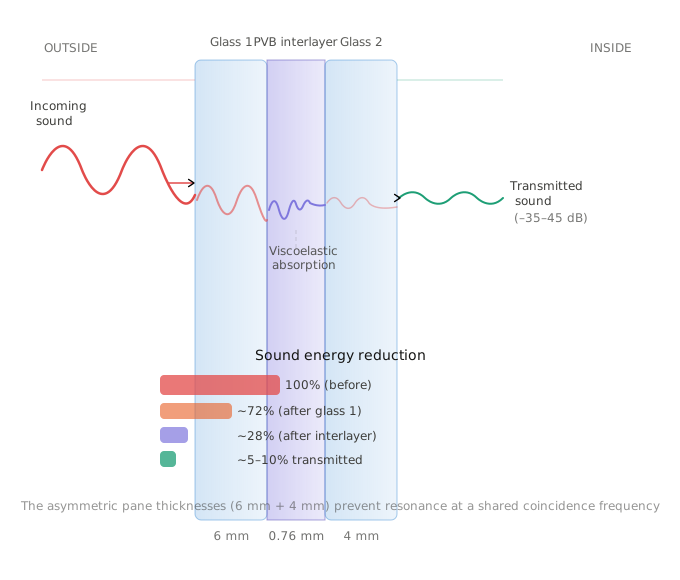
Acoustic glass looks much like any other pane, but the difference lies inside. It is made by bonding two or more sheets of glass together with a special acoustic interlayer — usually a flexible plastic called PVB (polyvinyl butyral) — sandwiched between them under heat and pressure. This laminated construction is what gives the glass its sound-dampening qualities.
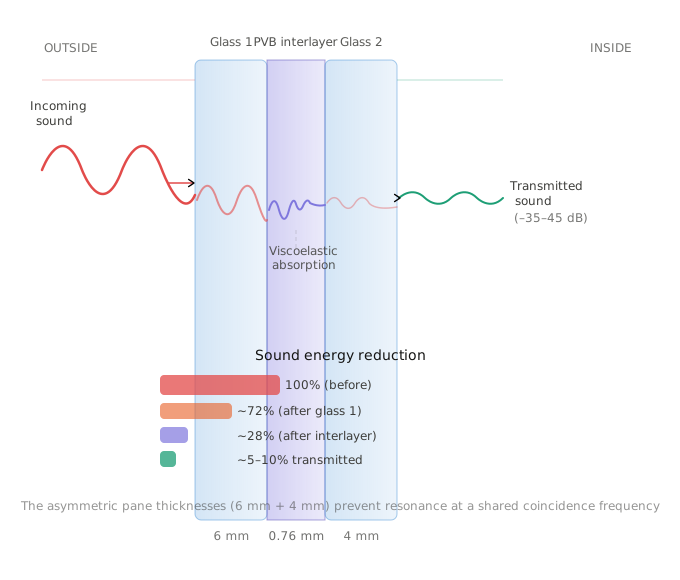
Acoustic glass cross-section showing sound wave damping through PVB interlayer
There are a few things going on that make it effective:
Damping. The soft, flexible interlayer absorbs sound vibrations as they hit the glass and converts them into tiny amounts of heat, rather than letting them travel straight through to the other side. This is the key feature that sets acoustic glass apart from standard glass.
Mass. Heavier, thicker glass is harder for sound waves to set vibrating. More mass means better sound blocking, particularly for deeper, lower-frequency noise such as traffic rumble.
Asymmetry. The best acoustic units use two panes of different thicknesses rather than two identical ones. Each thickness naturally resonates at a different frequency, which removes the “weak spot” where matching panes would vibrate together and let sound slip through. This is a simple but important detail in how high-performing acoustic glass is designed.
The gap matters too.
In a double-glazed acoustic unit, the space between the panes also plays a part. The gap helps to decouple the two sheets of glass, so vibrations struggle to pass from one to the other. A wider gap generally improves performance, especially against low-frequency noise.
How performance is measured
The sound-reducing ability of glazing is given as an Rw rating, measured in decibels (dB) — the higher the number, the more sound is kept out. As a rough guide, standard double glazing reduces noise by around 30 dB, while good acoustic glass can achieve 40 dB or more. Because the decibel scale is logarithmic, that extra reduction represents a substantial improvement in how quiet a room actually feels.
How does acoustic glass compare to triple glazing?
This is one of the questions we hear most often, and the answer surprises a lot of people: for noise reduction specifically, acoustic double glazing typically outperforms standard triple glazing.
Triple glazing adds a third pane primarily to improve thermal insulation, not sound reduction. Because all three panes are usually the same thickness, they share similar resonant frequencies — meaning sound can still find a way through at those frequencies. A standard triple-glazed unit typically achieves an Rw of around 32–34 dB, which is only a modest improvement on ordinary double glazing.
Acoustic double glazing, on the other hand, is engineered specifically around the problem of sound. The laminated interlayer, the asymmetric pane thicknesses and the optimised cavity width work together to achieve Rw ratings of 40 dB or above — noticeably better than triple glazing for noise, while keeping the unit slimmer and lighter.
That said, the two technologies can be combined. Triple-glazed units built with an acoustic laminate on one or more panes offer the best of both worlds — excellent thermal performance and superior noise reduction — though they come at a higher cost and require frames designed to carry the extra weight.
So if noise is your main concern, acoustic double glazing is usually the better choice. If you want to prioritise energy efficiency alongside noise reduction and budget allows, an acoustic triple-glazed unit is worth exploring.
Is it right for your home?
Acoustic glass is well worth considering if you live near a main road, railway, airport, busy high street or any other persistent source of noise, or simply if peace and quiet is a priority for you. It can be combined with the energy-efficiency and security benefits of modern double glazing, so you don’t have to choose between comfort and performance.
If you’d like to talk through the right specification for your home, our team is always happy to help you find the best option for your windows and your budget.