

French Doors Glasgow | Costs, Styles & Expert Advice | Williams Windows
- 02 June 2026
- Doors
French Doors in Glasgow: What They Are, How Much They Cost & Whether They’re Right for Your Home
There’s a reason French doors have been a feature of British homes for centuries. They let in light, connect inside to outside, and — done well — look genuinely elegant. But with bi-fold doors dominating the showrooms and sliding patio doors sitting at a similar price point, it’s a fair question to ask: do French doors still make sense in 2025?
The honest answer is: it depends on your home and what you’re trying to achieve. This guide walks through everything Glasgow homeowners need to know — materials, costs, planning rules, and how French doors stack up against the alternatives.
What exactly are French doors?
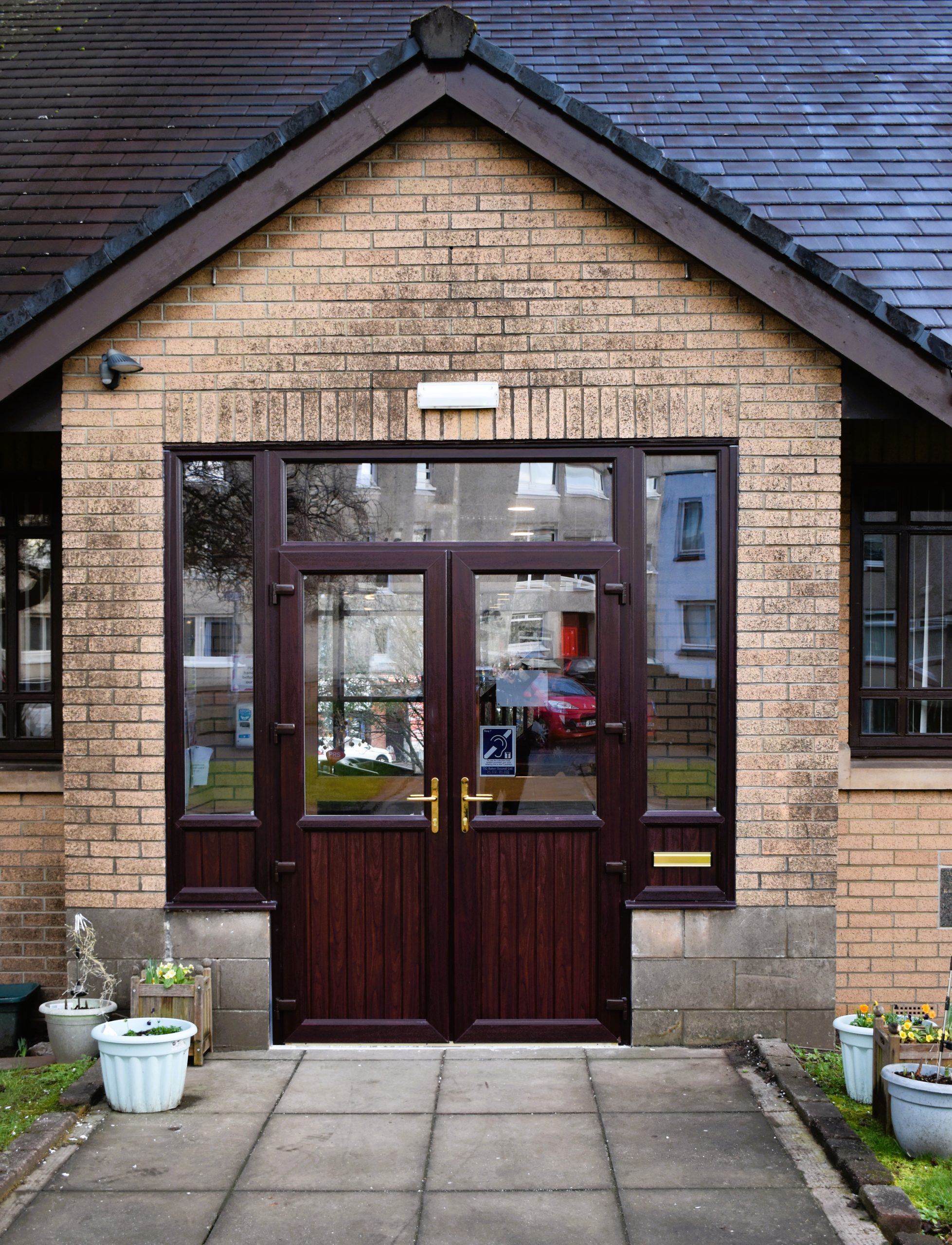
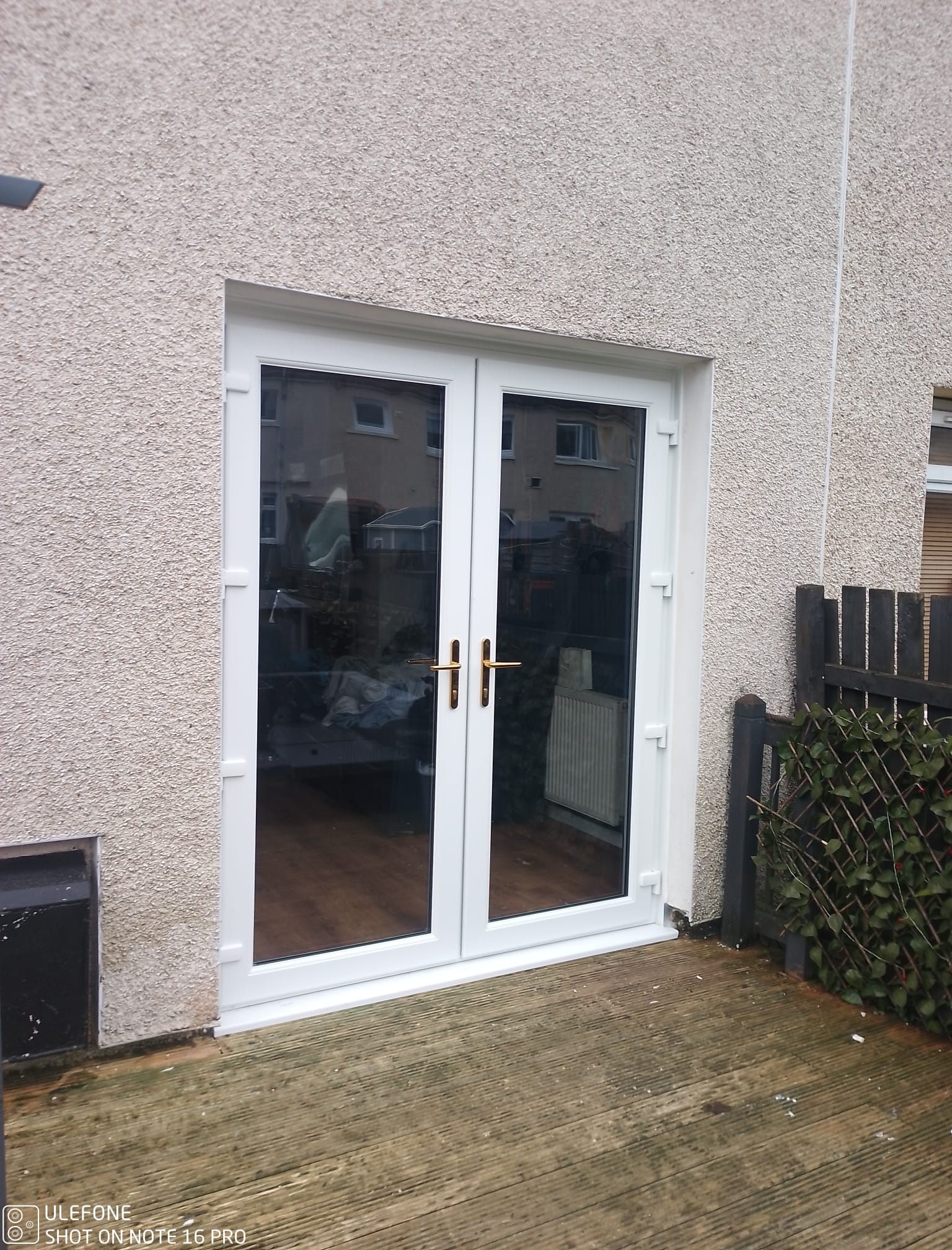
French doors are a pair of full-height doors that open outwards (or inwards) from the centre, typically with large glazed panels running almost the full length of each leaf. They’re hinged at the sides rather than folding or sliding, which gives them a clean, classic look that suits both traditional and modern properties.
Most commonly fitted at the back of a house leading to a garden or patio, they can also work well on a rear extension or as an access point between a kitchen and a dining area. For properties where the opening is 1.2m to 1.8m wide, French doors often make more practical sense than bi-folds, which really come into their own at wider spans.
French doors vs bi-fold doors vs sliding patio doors: which is best?
This is the question we’re asked most often, and there’s no universal answer. Here’s a straightforward breakdown:
French doors are the strongest choice when:
- Your opening is narrower — typically 1.0m to 1.8m wide
- You want a traditional or period aesthetic (especially relevant for Glasgow’s Victorian and Edwardian terraces)
- Budget is a consideration — French doors are generally the most affordable of the three
- You want a fully open doorway without a central post or folding sections
- You’re replacing an existing double door and want a like-for-like upgrade
Bi-fold doors are the stronger choice when:
- You have a wide opening (1.8m to 6m+) and want to open it fully
- You’re extending into the garden and want a wall-of-glass effect
- The architectural look is contemporary and you want the doors to make a design statement
Sliding patio doors are the stronger choice when:
- Space is tight and you can’t have outward-opening doors (a patio, deck or close garden path)
- You want a low-profile option that blends into the background
- You only need one panel to open regularly
French doors don’t fold or slide, which means they swing out (or in) when you open them. That’s worth thinking about if you have a narrow patio or a busy walkway directly behind the door. It’s one of those things that sounds minor but becomes noticeable every day if it’s not planned for.
uPVC or aluminium French doors — which material is right for a Glasgow home?
Both materials work well in the West of Scotland’s damp, mild climate. The choice usually comes down to budget and aesthetics.
uPVC French doors
uPVC remains the most popular choice for French doors across Scotland, largely because it offers excellent thermal performance and very low maintenance at a competitive price. Modern uPVC profiles are a long way from the white plastic boxes of the 1990s — you can now get them in a wide range of foiled finishes (Anthracite Grey and Black are hugely popular right now) that look genuinely smart from the street.
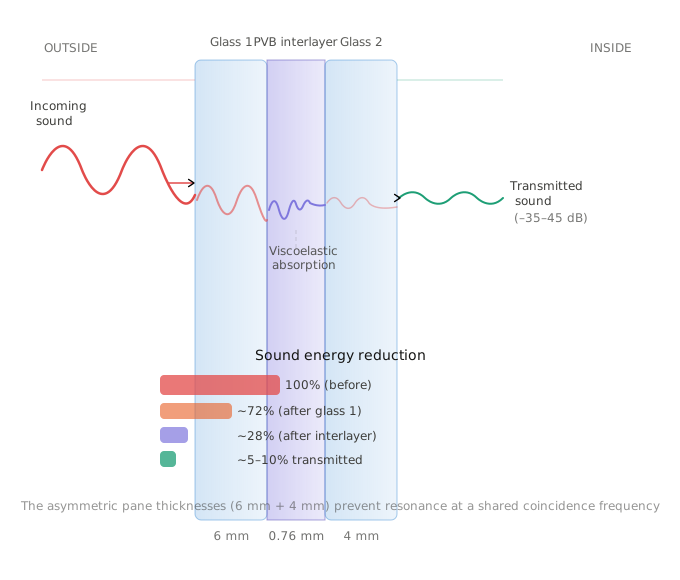
One thing uPVC does particularly well is noise insulation, which matters in urban areas of Glasgow where road noise can be a factor. The frames are inherently better at dampening sound than slim aluminium profiles.
Aluminium French doors
Aluminium gives you slimmer sight lines — less frame, more glass — and an inherently sharper, more contemporary look. If you’re fitting French doors as part of a modern extension or a clean-lined renovation, aluminium tends to look more resolved. It’s also stronger, which means larger panes of glass are possible within the same door frame.
The trade-off is cost. Aluminium French doors typically run ~30% more than equivalent uPVC units. They’re not a budget option, but for the right property they’re genuinely worth it.
How much do French doors cost in Glasgow?
Pricing is always a tricky thing to publish because every opening is different. That said, here’s a realistic ballpark for a standard double French door (supply and installation included) in the Glasgow area:
- White uPVC French doors: £1,400 – £1,600 fitted
- Coloured uPVC French doors: £1,700 – £1,800 fitted
- Aluminium French doors: £2,000 – £3,500 fitted
- These figures assume a standard residential opening with no structural alterations needed.
Costs rise if you need a lintel installed or the opening widened — your surveyor will be able to tell you at survey stage whether any structural work is needed. At Williams Windows, we manufacture our own frames here in Clydebank, which removes a layer of cost compared to buying through a third-party retailer.
Do I need planning permission for French doors in Glasgow?
In most cases, no. Replacing existing doors with French doors — or fitting them into an existing aperture — falls under permitted development for the majority of homes in the Glasgow area. You don’t need planning permission as long as:
- You’re not in a conservation area or on the frontage of a listed building
- You’re replacing like-for-like (same size opening, rear of house)
- The work doesn’t involve significant structural alterations to a load-bearing wall
That said, if you’re in the Merchant City, the West End conservation area, or own a B-listed property, it’s worth checking with Glasgow City Council’s planning department before proceeding. Even if planning isn’t required, all new external doors in Scotland must comply with current Building Regulations — specifically Section 6 (Energy) and Section 7 (Sustainability).
What glass should I choose for French doors?
All new French doors in Scotland must be fitted with double or triple glazed units to meet energy efficiency requirements. Beyond that, there are a few practical choices:
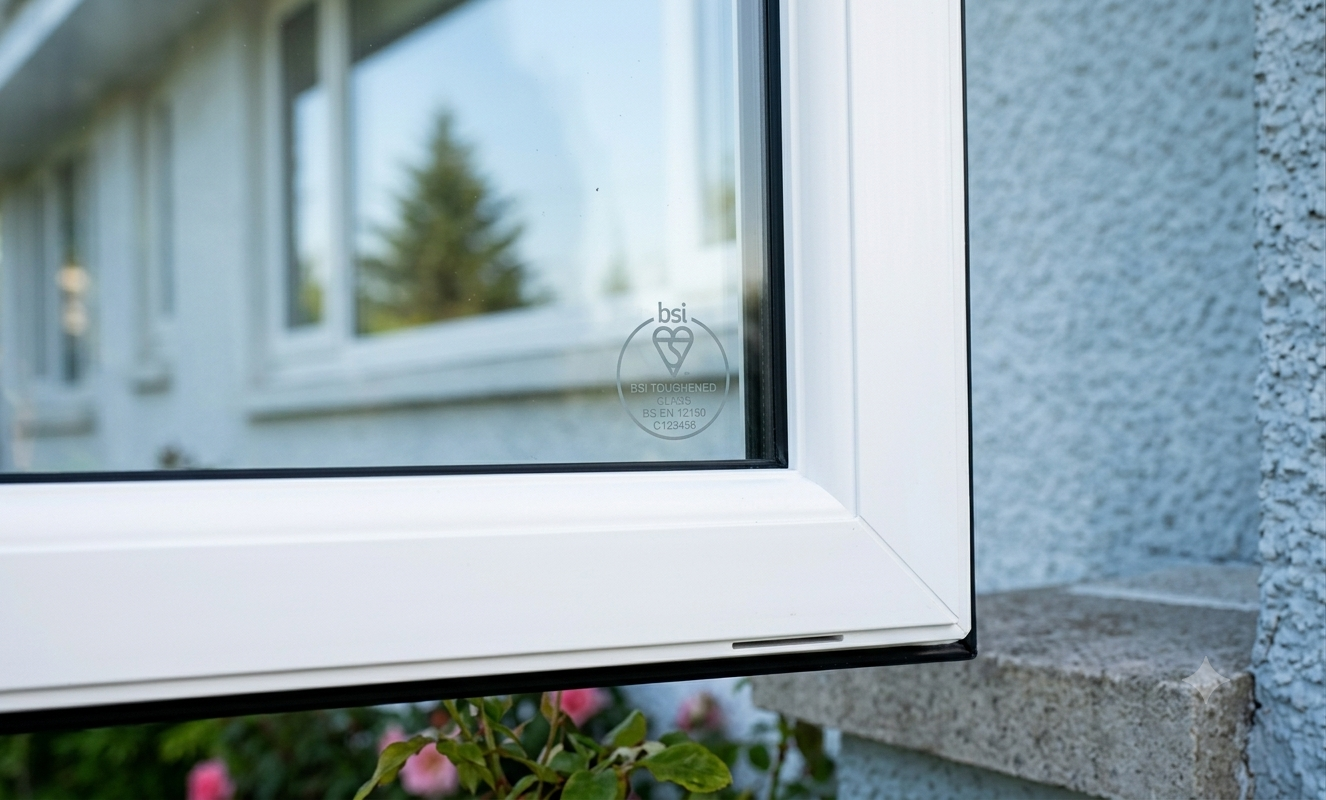
- Safety glass: All glass in doors should be toughened (to BS EN 12150) or laminated as standard — any reputable supplier will do this automatically.
- Obscure glass: If privacy is a concern (side access, overlooked garden), you can specify a frosted or textured glass on the lower panels.
- Low-E coating: A pyrolytic or soft-coat low-emissivity coating on the inner pane improves thermal performance noticeably — worth specifying, particularly in older homes.
- Triple glazing: Becoming more common in Scotland, it gives better U-values and improved acoustic performance, but adds weight to the door. We normally wouldn’t recommend using triple glazing in french doors due to the additional stress on the hinges.
Security: are French doors safe?
This is a question worth taking seriously. French doors have a centre join that can be a weak point if the hardware is poor quality. The answer is to specify multi-point locking as standard — modern French door locks engage at multiple points along the frame when you lift the handle and turn the key, making them as secure as any other well-fitted external door.
Look for doors tested to PAS 24 (Enhanced Security Performance Requirements) — this is the benchmark standard for external doors in the UK and is increasingly specified as a requirement by insurers. At Williams Windows & Doors, our doors come fitted with Secured by Design multi-point locks as standard.
How to get French doors that last in the West of Scotland climate
Glasgow doesn’t exactly go easy on external joinery. High rainfall, wind-driven rain from the south-west, and relatively low sunshine hours means frames, seals and hardware all take a battering. A few things worth specifying:
- Stainless steel or marine-grade hinges and hardware — standard zinc die-cast hardware can corrode more quickly in wet conditions
- A good compression seal on the meeting stile (the join between the two doors) — this is where French doors most commonly develop draughts
- Weather bar at the threshold — a low-profile threshold bar prevents water ingress, particularly important where French doors open onto a patio at ground level
- Quality gaskets — rubber gaskets degrade over time; premium EPDM gaskets last significantly longer
Buying directly from a manufacturer who builds their own frames — as we do at Williams Windows & Doors in Clydebank — means the specification is right first time, rather than whatever a national retailer happens to stock.
Restrictors: Preventing Doors from Smashing in the Wind
One often-overlooked addition that makes a real difference in practice is a hinge restrictor. French doors open wide, and in the West of Scotland — where a calm morning can turn blustery before you’ve finished your coffee — an unrestrained door catching a gust can slam back hard against the frame or the wall, damaging both the door and the hinges over time. A restrictor holds the door at a fixed open position, typically around 90 degrees, so it can’t swing beyond that point. It’s a small addition in cost but it significantly extends the life of the hardware and saves the kind of frustration that comes with a warped frame two winters down the line.
Window-to-Door Conversion
It’s also worth knowing that you don’t necessarily need an existing door opening to have French doors fitted. We regularly convert ground-floor windows into French door openings — removing the window, lowering the cill to floor level, and installing the new door set in its place. In the majority of cases this doesn’t require a new lintel, because the existing one above the window is already doing the structural job and can simply be retained. It’s one of the most cost-effective ways to transform a room: you gain direct garden access, better light and a completely different feel to the space, usually for less than you’d expect.
If you’ve looked at a rear room and thought it could do with opening up, it’s well worth asking about during your survey.
The Bottom Line
French doors are not the flashiest option on the market right now — that title belongs to bi-folds — but they remain one of the most practical and cost-effective ways to open up a rear elevation. They suit Glasgow’s housing stock well, they’re simpler to maintain, and they look right on everything from a Merchant City flat to a modern Milngavie extension.
If you’d like to see examples of French door installations or get a no-obligation quote, call us on 0141 941 3050 or book a free design consultation online. Our showroom is based in Clydebank and we supply and install across Glasgow and the West of Scotland.